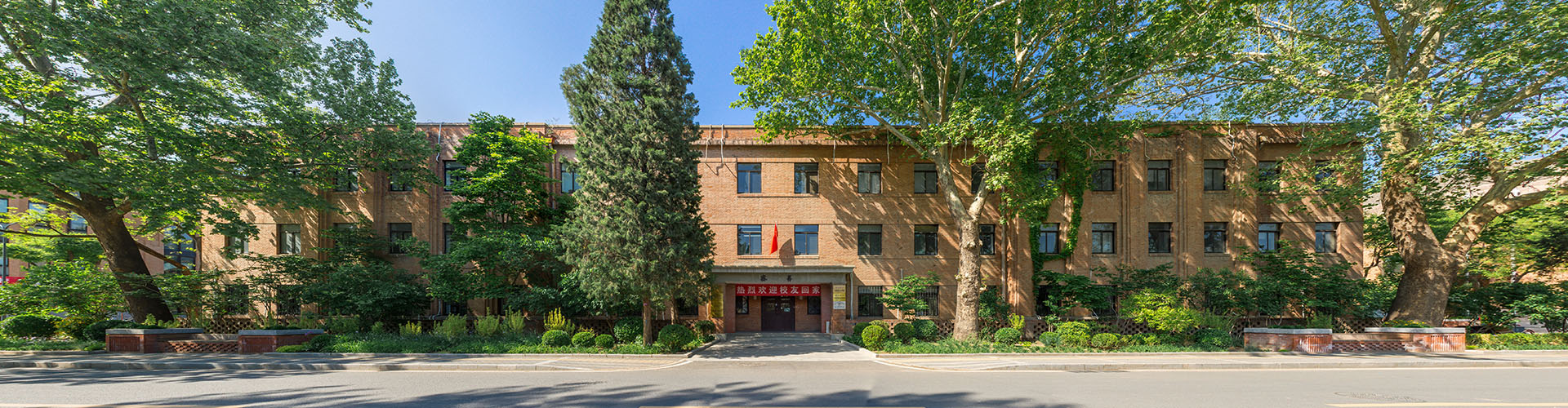
Article 1 Classrooms are important places for teaching activities. These regulations are formulated to ensure the rational use of classroom resources, standardize and orderly manage classrooms, and guarantee the normal conduct of teaching activities.
Article 2 Public classrooms shall be managed uniformly by the university, and special-purpose classrooms shall be managed by the relevant schools, departments, or institutes.
Article 3 Any change in the use of public classrooms shall be approved by the principal in charge or the dean of academic affairs with their signature, and filed with the Asset Management Office.
Article 4 All classrooms of the university shall be allocated and used by the Registration Center in accordance with the undergraduate and postgraduate teaching plans. The Property Management Center and the Information Technology Center shall cooperate in completing relevant work during the use of classrooms.
Article 5 Classrooms must be used in accordance with the schedule. Teachers shall conduct teaching activities strictly in the assigned classrooms and within the specified time, and shall not arbitrarily change classrooms or class hours.
Article 6 If it is necessary to change the classroom arrangement or class time in the schedule due to special reasons, the teacher must fill in the Application Form for Class Adjustment, which shall be reviewed and signed by the person in charge of teaching in the department, and approved by the head of the Registration Center before rearrangement.
Article 7 For any other activities not scheduled in the course timetable that require the use of classrooms, the procedures for borrowing classrooms must be completed, and the classrooms can only be used after being arranged by the Registration Center.
Article 8 Users shall take good care of all teaching facilities and public property in the classroom. No arbitrary disassembly or removal of classroom items is allowed. Those who damage public property shall compensate according to the price.
Article 9 Consciously maintain the environmental hygiene of classrooms. It is prohibited to litter any waste in classroom buildings; to post various commercial advertisements in teaching buildings; and to smoke in teaching buildings.
Article 10 Keep the teaching area quiet. It is prohibited to make loud noises, sing, dance, play music loudly, play ball games, or peddle goods in teaching buildings. Without permission, it is prohibited to hold various forms of parties, evening events, or board games in teaching buildings or classrooms.
Article 11 It is strictly prohibited to bring flammable, explosive, or other dangerous goods into classroom buildings, to use open flames, or to move or damage fire-fighting equipment and fire safety signs.
Article 12 When using audio-visual equipment in the classroom, users shall abide by the operating procedures of the equipment. It is strictly prohibited to use external electronic equipment with mismatched power.
Article 13 Classrooms or classroom seats shall not be occupied arbitrarily. Eating in classrooms or locking classroom doors for self-study is prohibited.
Article 14 Users shall pay attention to saving water and electricity, and turn off the lights consciously when leaving the classroom.
Article 15 Abide by the classroom usage hours and actively cooperate with classroom administrators. Classrooms open at 7:00 a.m. and close at 10:00 p.m. during non-examination periods, and at 10:30 p.m. during examination periods.
Article 16 Classrooms are only available for use by on-campus units and student organizations. Individuals, off-campus enterprises, institutions, and social organizations are not allowed to borrow them.
Article 17 The actual use of classrooms shall be consistent with the content stated in the borrowing form. If any violation is verified, the relevant unit shall be notified to the whole university, and penalties such as suspension of classroom borrowing shall be imposed according to the seriousness of the case.
Article 18 When departments or schools borrow classrooms, the relevant person in charge of the unit must review the content of the activity. Student organizations borrowing classrooms must have the activity content reviewed by the Student Affairs Office, the Graduate Affairs Office, or the competent authority of the Youth League Committee.
Article 19 For non-teaching activities (such as meetings, training, etc.) held by departments or schools, fees shall be charged according to the standards approved by the on-campus fee assessment team.
Article 20 Classrooms shall not be borrowed for various lectures, training sessions for commercial publicity purposes, evening parties, or screenings of entertainment films.
Article 21 For special-purpose classrooms, or for continuous or long-term (one semester) borrowing of classrooms for training or lectures, approval from the competent leader is required.